Another Greece Recommendation
hardly needed.

The Last Thing Greece Needs Is Another Recommendation
I have become increasingly reluctant to tell people where to go in Greece.
This is awkward because people ask me all the time.
Friends ask. Friends of friends ask. Someone’s cousin who once sat next to me at dinner asks. The requests arrive with admirable optimism:
“We’re going to Greece for ten days. Where should we go?”
As though ten days and a functioning airport somehow narrow the possibilities.
For years, I happily answered. I had lists. I had maps. I had strong opinions. I could tell you where to find the best beach, the best taverna, the best village you’ve never heard of. I considered myself a benevolent distributor of insider information.
Now, when someone asks, I find myself hesitating.
Partly because nobody listens.
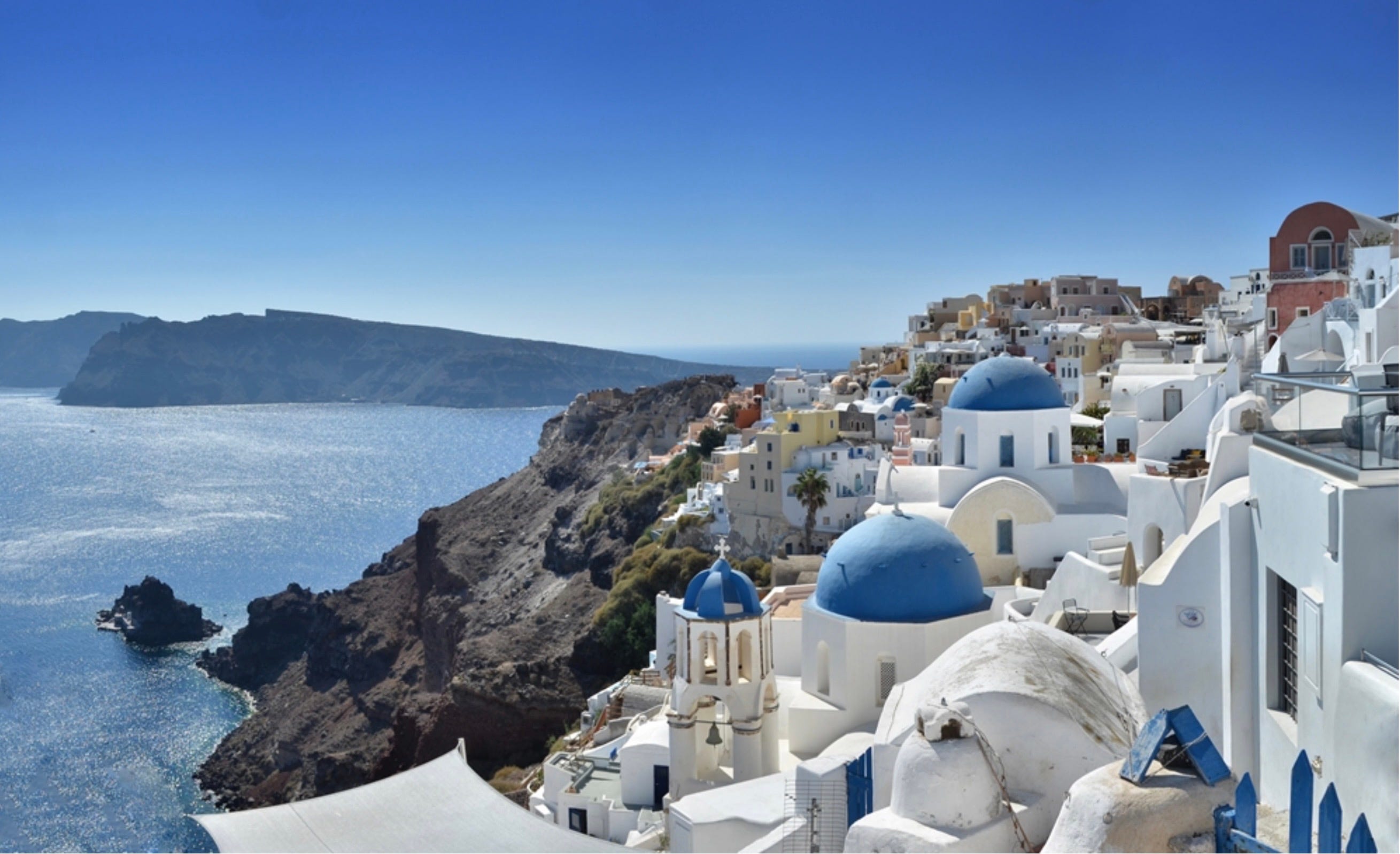
They ask for hidden gems and then book Santorini.
Nearly. Every. Single. Time.
I don’t mean to pick on Santorini. It’s spectacular. There is a reason millions of people want to see it. The caldera is stunning. The sunsets are genuinely beautiful. But somewhere along the line, travel stopped being about discovery and started resembling a scavenger hunt for locations already approved by Instagram.
People ask me for alternatives to the crowded islands, listen politely, nod thoughtfully, and then send me photos from the exact blue-domed church everyone else photographed that morning.
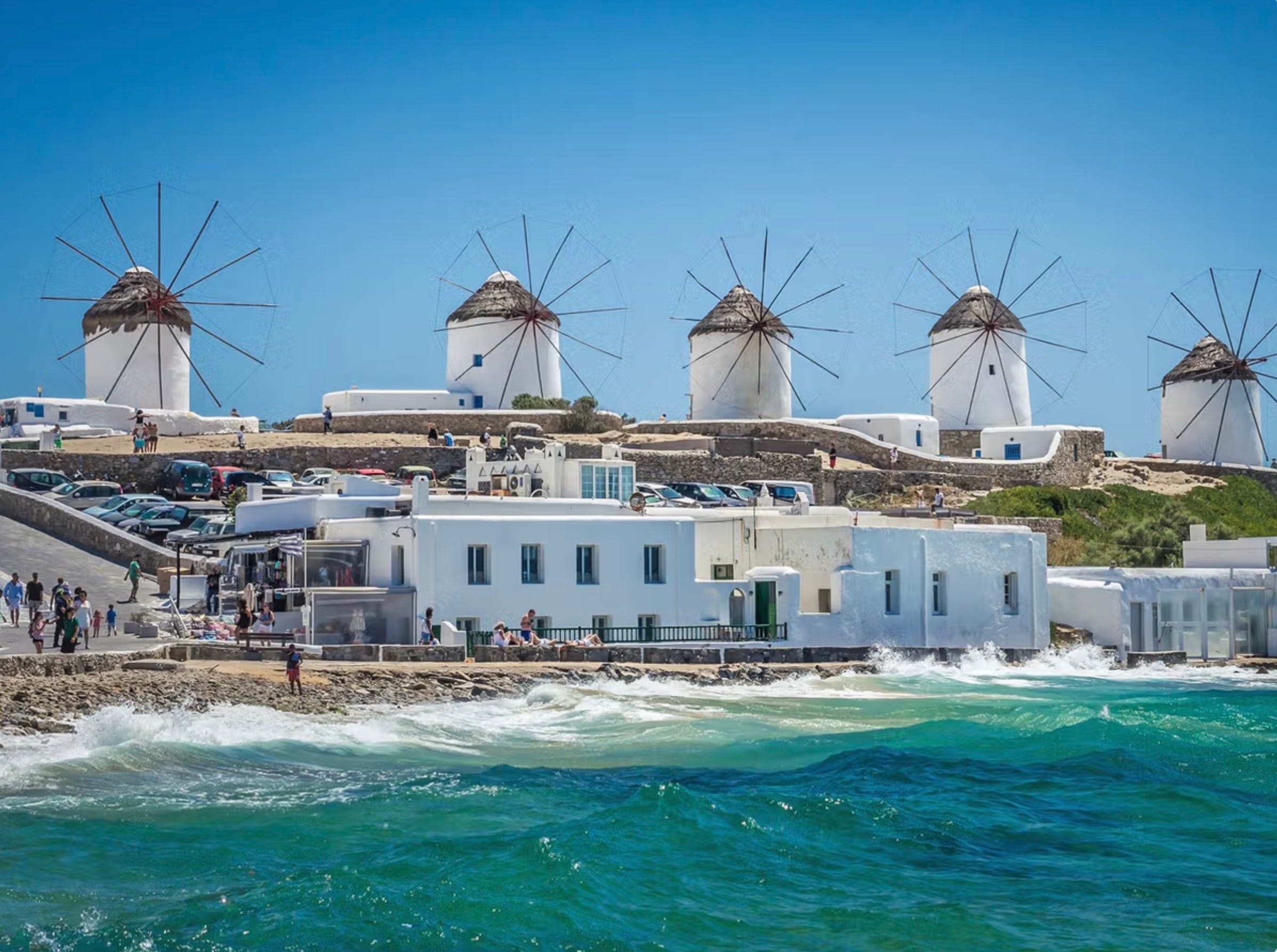
Mykonos follows a similar pattern. Mention a quiet island with beautiful beaches, excellent food, and actual residents who still live there year-round, and watch eyes glaze over. Mention Mykonos and suddenly everyone is paying attention.
The brochures have won.
But that’s only part of it.
The bigger problem is that my favorite places are becoming victims of their own success.
What used to feel like discoveries now require reservations. Places where you could wander into a taverna at sunset now have waiting lists. Beaches that once felt remote now have organized parking, beach clubs, and influencers conducting photo shoots in coordinated linen outfits.
The secret places are no longer secret.
And before anyone accuses me of gatekeeping, let me say what should be obvious: I know exactly how selfish this sounds.
I am essentially complaining that other people have discovered places I discovered after previous generations had already discovered them.
I hear myself.
I don’t like it either.
Still, there is a difference between a place being visited and a place being overwhelmed.
The locals certainly know the difference.
Tourism brings money, jobs, and opportunities. Entire regions depend on it. Yet the costs are becoming harder to ignore.
There is more trash. Water becomes scarcer. Infrastructure strains under seasonal populations many times larger than the number of permanent residents. Young people who grew up in these communities increasingly struggle to afford homes there, thanks in part to the transformation of housing into short-term rentals.
A charming fishing village is wonderful.
A charming fishing village that consists entirely of Airbnbs, souvenir shops, and visitors looking for an “authentic local experience” is something else entirely.
And then there are the cruise ships.
Cruise ships are perhaps the purest expression of modern tourism efficiency.
Thousands of people arrive simultaneously. They eat on the ship. They sleep on the ship. They spend a few hours flooding narrow streets, filling archaeological sites, and generating lines that appear visible from space. Then they leave.
The town receives all the pressure and only a fraction of the economic benefit.
It’s hard not to feel sympathy for residents who wake up each morning to discover that several thousand additional people have arrived before breakfast.

My other recurring challenge comes after people return home.
Nothing tests one’s self-control quite like listening to someone explain a culture after spending three hours there.
A bus tour, a guided walk, and a souvenir purchase somehow produce instant expertise.
The guide said something once, and now it has become an immutable truth about an entire nation and its history.
I generally smile and nod.
What I want to say is that if I spent two hours in Disneyworld, I would not immediately begin delivering lectures on American civilization.
But maturity is learning which thoughts should remain inside your head.
The uncomfortable reality, of course, is that I am not outside this system.
I travel. I contribute to crowds. I have undoubtedly stood in somebody else’s favorite hidden place and unknowingly helped make it less hidden.
I’m not arguing that people should stop visiting Greece, or Italy, or Croatia, or Iceland, or anywhere else suffering from the consequences of being beautiful.
Travel remains one of the best ways to understand the world.
I just wish we approached it differently.
Stay longer.
See fewer places.
Spend money where locals actually benefit.
Accept that not every meaningful experience needs photographic proof then posted across the multitude of social media apps.
And perhaps most importantly, allow some places to be ordinary. Not every village needs to become a global destination.
As for me, I’ll probably continue answering the questions.
I’ll continue recommending islands, restaurants, beaches, and villages.
I’ll continue pretending that people are genuinely interested in alternatives to Santorini.
And then I’ll watch them book Santorini anyway.
Because despite all my complaints, I understand the impulse.
The only thing stronger than the desire to discover a beautiful place is the desire to tell someone else about it afterward.
Unfortunately, that’s also how the trouble starts.
This resonated with me far beyond Greece.
I grew up in India, another country that seems to live permanently on the world’s travel bucket list. I understand the pride of watching people fall in love with the place that shaped you. But I also understand the quiet grief of watching a living culture become an itinerary.
There is a difference between visiting a place and consuming it. One asks, “How do people live here?” The other asks, “Where do I stand to recreate the photo I already saw online?”
Tourism can sustain communities, but it can also flatten them into performances. Markets become stages, traditions become products, and neighborhoods slowly reorganize themselves around visitors rather than residents.
Perhaps beauty was never meant to be collected. It was meant to be encountered, allowed to change us and then left free to remain itself.
I think the greatest gift a traveler can offer is not admiration but humility: to arrive as a guest, to listen more than speak, to stay long enough for a place to become more complicated than a postcard, and to leave without feeling entitled to explain an entire culture after a handful of days.
Your essay captures that tension beautifully. Loving a place sometimes means accepting that not everything beautiful needs to become famous.
Haha, two hours at Disneyworld might give you an EXCELLENT sampling of current American reality! 🤣